The biggest mistake we see in Tallahassee is relying solely on SPT data in the city's interbedded clays and limestone. By the time you hit refusal on a split-spoon, you have lost the transition zones that control settlement. CPT provides a continuous resistance trace that catches those thin seams. In a city where the Hawthorne Group can throw a soft clay lens right under a stiff caprock, that resolution matters. We run our 20-ton rig from Lake Jackson to Southwood, pushing through the overburden to map tip resistance, sleeve friction, and pore pressure in one go. For deeper karst investigations, we often pair CPT data with seismic refraction to flag voids before they become a problem during construction.
In Tallahassee's interbedded clays and limestone, CPT catches the thin seams that SPT misses, and that resolution directly reduces over-excavation costs.
Our approach and scope
- Continuous tip resistance (qc) and sleeve friction (fs) profiles
- Pore pressure dissipation tests for consolidation and permeability estimates
- Soil behavior type classification from Robertson charts
- Real-time data QA with calibrated load cells traceable to ASTM D5778
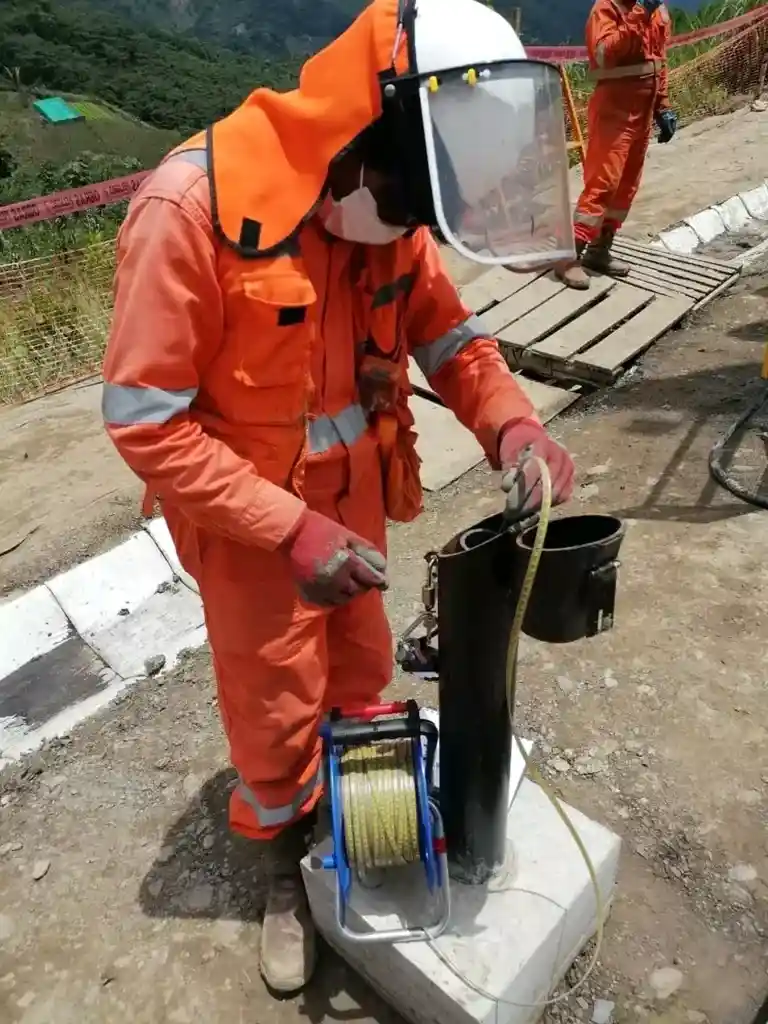
Local ground factors
Our CPT rig is a 20-ton track-mounted unit with a hydraulic push system, not a drill. That distinction matters in Tallahassee because we are not circulating fluids. In karst terrain, drilling mud can mask cavity loss zones; a cone push shows a real-time drop in tip resistance the instant the probe crosses a void or softened zone. The risk we mitigate is the hidden raveling cavity just above the limestone surface. Building a shallow foundation over a 2-foot void 15 feet down can lead to sudden collapse years later. CPT profiling with pore pressure measurement helps identify these features before a footing is poured. We also use dissipation tests to estimate consolidation rates in the plastic clays of the Miccosukee Formation, giving the structural engineer a defensible settlement timeline.
Video overview
Reference standards
ASTM D5778-20 Standard Test Method for Electronic Friction Cone and Piezocone Penetration Testing of Soils, ASTM D2487 Standard Practice for Classification of Soils for Engineering Purposes (Unified Soil Classification System), ASCE 7-22 Minimum Design Loads and Associated Criteria for Buildings and Other Structures, Florida Building Code 2023, Chapter 18: Soils and Foundations, FDOT Soils and Foundations Handbook, Chapter 3: Subsurface Investigation Guidelines
Additional services
Piezocone (CPTu) Profiling
Full cone with pore pressure transducer at the u2 position. We run dissipation tests at target depths to estimate the coefficient of consolidation in the Hawthorne Group clays. This data feeds directly into settlement rate models for shallow foundations.
Seismic Cone (SCPTu) Testing
Cone with integrated geophone for downhole shear wave velocity measurement every meter. We use this to derive small-strain shear modulus (Gmax) for Tallahassee's seismic site class determination per ASCE 7. Critical for essential facilities.
CPT-Based Foundation Design Package
Direct computation of shallow and deep foundation capacity from cone resistance using methods by Schmertmann, LCPC, and Eslami & Fellenius. We deliver allowable bearing pressure charts and settlement estimates without relying on lab correlations alone.
Typical parameters
Questions and answers
What is the typical cost of a CPT sounding in Tallahassee?
For a standard CPTu push to 60 feet with one dissipation test, our fee ranges from US$190 to US$230 per test, depending on the number of soundings and site accessibility. Deeper pushes past 80 feet or seismic cone add-ons increase the rate. We carry out a lump-sum proposal after reviewing the site location and access constraints.
How does CPT compare to SPT drilling for Tallahassee clays?
In our expertise across Leon County, CPT gives a continuous resistance profile every 10 mm, while SPT recovers disturbed samples every 5 feet. In the interbedded Hawthorne Group, CPT catches thin sand or silt seams that SPT can easily miss. The tradeoff: CPT does not recover a physical sample, so we sometimes recommend a companion boring when classification verification is required.
Can you push through the limestone caprock near Lake Jackson?
Refusal occurs when the cone tip hits competent limestone, typically at depths between 40 and 80 feet depending on the paleotopography of the Ocala Limestone surface. We cannot core through solid rock with CPT. When we hit refusal, we note the depth and tip stress at refusal, then shift to a different investigation method for the rock mass.
What data deliverables do you provide after testing?
We deliver a PDF report with corrected tip resistance (qt), sleeve friction (fs), friction ratio (Rf), pore pressure (u2), and interpreted soil behavior type per Robertson (1990) charts. Tabulated digital data in Excel or gINT format is included. For seismic cone, we add shear wave velocity profiles and Gmax values.
How long does a typical CPT field program take in Tallahassee?
For a standard commercial site with 6 to 8 soundings to 60 feet, we normally complete field work in one day, assuming no major access issues. Pore pressure dissipation tests add 15 to 30 minutes per depth. We mobilize from our regional base and can typically schedule within a week of authorization.