We see it too often in Tallahassee: a well-designed retention pond that won't hold water, or a dewatering plan that collapses because the contractor assumed a generic permeability value. The soils here don't read the textbooks. Between the clayey sands of the Miccosukee Formation and the weathered limestone cavities north of I-10, assuming a flat 1x10^-5 cm/s coefficient is a fast track to a failed water management system. A proper field permeability test removes that guesswork. In our expertise running Lefranc and Lugeon procedures across Leon County, the in-situ values almost always surprise the design team. The variable saturation in the Tallahassee hills means lab tests on remolded samples rarely capture the preferential flow paths that control real drainage. Before finalizing your foundation design or dam cross-section, a CPT test can help map the stratigraphy, but nothing replaces a direct hydraulic measurement in the borehole.
A single Lugeon test in fractured limestone tells you more about seepage risk than a hundred lab perm tests on intact core.
Our approach and scope
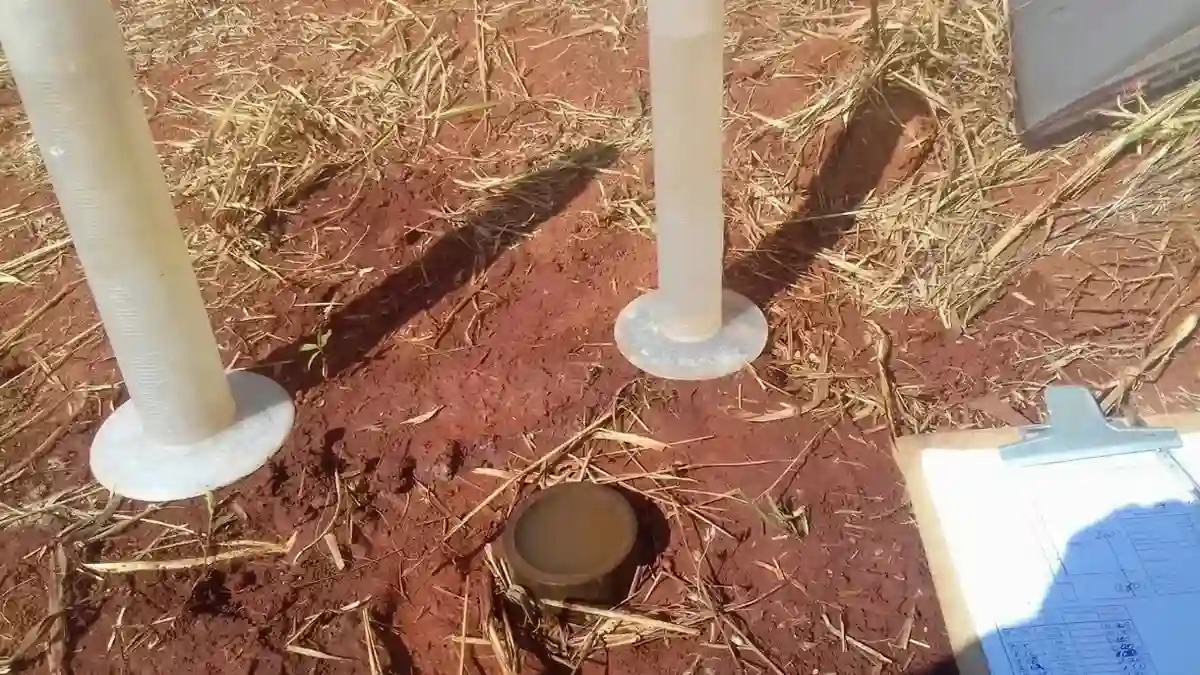
Local ground factors
A few miles south of downtown Tallahassee, we worked on a low-rise commercial building where the preliminary geotech report flagged a thin clay lens. The excavation was dry for weeks, so nobody worried. Then summer hit. The water table rose into the overlying sand, and the clay lens turned into a slippery failure plane. The excavation walls started sloughing, and the floor heaved. The original investigation had skipped in-situ permeability, relying on grain-size correlations that missed the lens entirely. A $900 Lefranc test in that layer would have shown the perched water risk instantly. In Tallahassee, where the water table can swing dramatically between the dry spring and the hurricane season, the biggest danger isn't just a high permeability—it's the anisotropy. Vertical drainage might be fine, but a horizontal sand seam can pipe water into your excavation from fifty feet away. We integrate the Lugeon test results with the seismic refraction profile to spot buried channels before they become a problem.
Reference standards
ASTM D6391-11 (reapproved 2020): Standard Test Method for Field Measurement of Hydraulic Conductivity Using Borehole Infiltration, ASTM D4630-19: Standard Test Method for Determining Transmissivity and Storage Coefficient of Low-Permeability Rocks by In Situ Measurements Using the Constant Head Injection Test, FDOT Soils and Foundations Handbook, Section 4.3 (In-Situ Testing), IBC 2021, Section 1803.5.2 (Groundwater Table Investigation)
Additional services
Lefranc Variable-Head Test
The workhorse for soil permeability in Tallahassee's sandy overburden. We isolate a test section with a pneumatic packer and measure the rate of water level recovery. This test provides the direct hydraulic conductivity (k) required for dewatering calculations, stormwater infiltration design, and seepage analysis for small dams and ponds. We run multiple tests in a single boring to capture vertical variability.
Lugeon Pressure Test in Rock
The definitive method for assessing the groutability and fracture permeability of the limestone underlying much of Tallahassee. We execute five pressure steps per test zone, maintaining constant pressure until flow stabilizes. The Lugeon pattern analysis distinguishes between tight rock, laminar flow through fine fissures, and open joints requiring treatment. Essential for dam foundations and deep shafts.
Typical parameters
Questions and answers
How much does a field permeability test cost in Tallahassee?
A standard Lefranc or single Lugeon test typically falls between US$670 and US$1,050 per test zone, depending on depth and access. This includes the packer setup, data acquisition, and the interpretation report. Multiple zones in one borehole reduce the per-test cost.
When should I specify a Lugeon test instead of a Lefranc test?
Specify a Lugeon test whenever you encounter rock that is fractured, vuggy, or weathered. In Tallahassee, if the RQD drops below 50% or you see iron-stained joints in the limestone core, it is time to switch. A Lefranc test in open fractures gives uncontrolled results; the Lugeon method’s pressure stages let you calculate the equivalent hydraulic aperture of the fractures.
How long does a field permeability test take to complete?
A single Lefranc test in a stable soil horizon can be done in under an hour once the drill rods are set. A full Lugeon test with five pressure stages in rock typically takes 60 to 90 minutes per zone. We usually complete two or three zones in a standard drilling shift, depending on the core run lengths.