Tallahassee’s humid subtropical climate creates a tough environment for asphalt. Summer temperatures push 95°F while winter nights can dip below freezing, and the average 58 inches of annual rainfall saturates the sandy subgrades common in Leon County. Proper flexible pavement design here isn’t just about traffic loads—it’s about managing water before it weakens the base. The Florida DOT Flexible Pavement Design Manual drives our methodology, but we calibrate every section using local material data. For projects near the Cody Scarp, where soil transitions from well-drained sands to clay-rich sediments, we often integrate field in-situ permeability testing to verify drainage coefficients before selecting layer thicknesses. A pavement structure that works in Killearn Estates can fail a mile south if the water table isn’t accounted for.
In Tallahassee, a pavement’s real enemy isn’t always the traffic load—it’s the water trapped beneath the asphalt.
Our approach and scope
Local ground factors
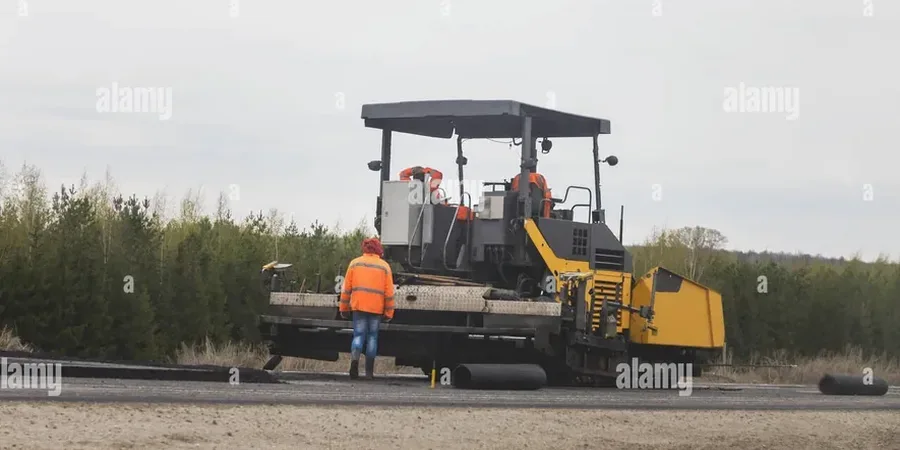
A nuclear density gauge sits on the fresh asphalt mat while the roller makes its final pass. This is where we verify that the theoretical flexible pavement design actually performs. The biggest risk we see in Tallahassee is stripping—moisture damage at the asphalt-aggregate interface—triggered by poor drainage in the base course. We mitigate this by specifying anti-strip additives in the mix design and by running moisture sensitivity testing per ASTM D4867 on the proposed asphalt blend. Another failure mode is subgrade rutting from underestimating the seasonal weakening of the Hawthorn clays. Our field team cores the finished pavement and checks each lift thickness against the plan; a 1-inch deficit in the base course can cut the pavement’s fatigue life in half.
Reference standards
ASTM D4867 – Moisture Sensitivity of Asphalt Mixtures, ASTM D2940 – Graded Aggregate Material for Bases, AASHTO Guide for Design of Pavement Structures (1993), Florida DOT Standard Specifications for Road and Bridge Construction
Additional services
Subgrade Soil Investigation
We drill and sample the upper 6 feet of subgrade, running classification tests and triaxial Mr testing to feed the pavement model with site-specific parameters, not textbook defaults.
Pavement Structural Design
Using AASHTO and MEPDG methods, we calculate the required asphalt, base, and subbase thicknesses for the projected traffic loading over a 20-year design life.
Material Specification & Testing
Asphalt binder grading, aggregate quality checks, and compaction verification ensure the materials placed on site match the design assumptions.
Forensic Pavement Evaluation
For rehabilitation projects, we core the existing pavement, measure layer thicknesses, and back-calculate remaining life to design an effective overlay strategy.
Typical parameters
Questions and answers
How does the high water table in Tallahassee affect flexible pavement design?
A shallow water table reduces the effective resilient modulus of the subgrade and can saturate the base course. We account for this by adjusting the drainage coefficient in the AASHTO equation and by specifying open-graded drainage layers when the water table is within 2 feet of the subgrade surface.
What is the typical design life of a flexible pavement in Leon County?
We typically design for a 20-year structural life for arterial roads and 10 to 15 years for residential streets and parking lots, per local agency requirements. The actual lifespan depends heavily on maintenance of surface cracks and timely seal coating.
What’s the estimated cost range for a flexible pavement design package in Tallahassee?
For a typical commercial or subdivision project, a complete flexible pavement design package—including subgrade investigation, structural design, and material specifications—runs between US$1,860 and US$5,260, depending on the number of borings and the traffic analysis depth required.
Do you use the MEPDG method or the older AASHTO 1993 method?
We are proficient in both. For most city and FDOT projects, we still use the 1993 AASHTO method because it’s widely accepted by local reviewing agencies. We employ MEPDG when the project has unusual traffic spectra or when mechanistic analysis is specifically required.
What’s the minimum asphalt thickness you recommend for a parking lot in Tallahassee?
For a standard commercial parking lot with car traffic only, we rarely specify less than 3 inches of asphalt over 6 inches of aggregate base. If there’s any truck traffic—like delivery vehicles—we bump the asphalt to 4 inches minimum to prevent premature fatigue cracking.