Tallahassee's urban expansion across the Cody Scarp has pushed development onto a geologically transitional belt where the well-drained Miocene sands of the Northern Highlands give way to the thick, compressible clays of the Gulf Coastal Lowlands. Building here without ground improvement is a gamble on differential settlement, and that's where stone column design becomes a practical necessity rather than a theoretical exercise. When a structural engineer in Tallahassee calls us about a warehouse slab showing distress on Hawthorn Group residuum, the conversation rarely stays abstract for long. We combine regional stratigraphic knowledge with CPT testing to map the exact depth where the limestone pinnacles and overlying soft clay interact, which defines the column length and diameter needed. The design process integrates IBC Chapter 18 provisions with proprietary settlement-tolerance models calibrated to the 30.4°N latitude's seasonal water-table fluctuation range.
A properly designed stone column network in Tallahassee's karst terrain transforms a marginal site into buildable land without the cost and schedule of deep foundations.
Our approach and scope
- Vibro-replacement pattern optimization using triangular vs. square grid spacing models
- Unit cell settlement analysis under area replacement ratios between 10% and 35%
- Bearing capacity verification accounting for the composite shear surface that cuts through both stone and native soil
- Liquefaction mitigation checks when the column extends below the seasonal high groundwater table
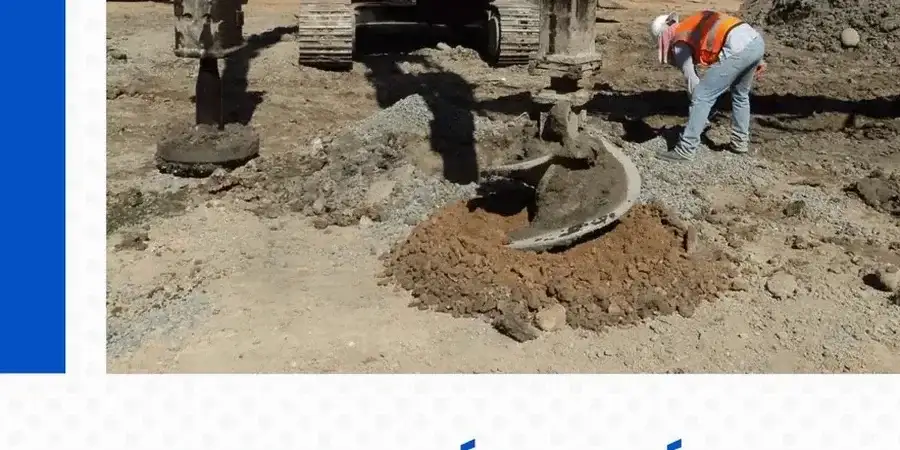
Local ground factors
In Tallahassee, we often see project owners approve foundation plans without recognizing that a thin sand lens at 12 feet depth can mask a dissolution pipe extending another 30 feet into the limestone. A stone column design that ignores this karst reality risks differential settlement exceeding 2 inches between adjacent columns, which cracks grade beams and tears utility connections. The IBC-mandated geotechnical investigation must therefore include a karst susceptibility assessment, using gridded CPT soundings spaced no wider than 50 feet on center, before we can responsibly size the columns. Skipping this step has led to at least three commercial building retrofits in the Apalachee Parkway corridor over the past decade, where undersized vibro-replacement failed to bridge the subsurface voids. Our approach treats each column as part of a three-dimensional load-transfer platform rather than an isolated element, ensuring that the composite reinforced ground mass behaves predictably even where the bedrock surface is highly irregular.
Reference standards
ASTM D1586 Standard Test Method for Standard Penetration Test (SPT) and Split-Barrel Sampling of Soils, ASTM D2487 Standard Practice for Classification of Soils for Engineering Purposes (Unified Soil Classification System), IBC Chapter 18 Soils and Foundations, ASCE 7 Minimum Design Loads for Buildings and Other Structures, ASTM D448 Standard Classification for Sizes of Aggregate for Road and Bridge Construction
Additional services
Design-Build Support for Stone Columns
We carry out the complete design package — column layout drawings, aggregate specification, vibrator energy criteria, and performance testing schedule — that a specialty ground improvement contractor needs to execute vibro-replacement in Tallahassee's variable karst conditions. The package includes a settlement-tolerance analysis benchmarked against CPT data.
Forensic Review of Existing Stone Column Installations
When a Tallahassee structure on stone columns shows unexpected settlement, we run a diagnostic program combining dilatometer testing between columns and downhole inspection of aggregate continuity to determine whether the failure mode is bulging, punching, or karst-related void migration.
Typical parameters
Questions and answers
What does stone column design cost for a typical Tallahassee commercial lot?
For a standalone design package covering a 30,000-square-foot commercial pad in Leon County, the fee typically ranges from US$1.510 to US$5.680, depending on the number of CPT soundings we must analyze and the complexity of the karst mitigation strategy required. This includes the signed-and-sealed report, installation specifications, and QA/QC testing plan.
How deep must stone columns extend in Tallahassee's karst geology?
Column depth is dictated by the refusal criterion established from CPT data, not a preset number. In Tallahassee, we typically terminate columns when tip resistance exceeds 40 tsf or the SPT N-value surpasses 20, which often occurs at the surface of the St. Marks limestone. In dissolution zones, columns may need to extend past the void-influenced overburden to bear on competent rock. Each design specifies the termination protocol so the contractor knows exactly when to stop the vibrator.
Can stone columns substitute for deep foundations under a mid-rise building in Tallahassee?
Yes, in many cases — but it depends entirely on the load column spacing and the CPT profile. For structures up to five stories with column loads under 250 kips, a properly designed stone column grid with a load-transfer mat can often replace driven piles, provided the area replacement ratio exceeds 20% and the soft clay thickness is less than 30 feet. We run a composite settlement analysis and check punching failure into any underlying dissolution voids before making that recommendation.